Back in 2018, my anxiety had spiraled me into an all-time low. One of the worst ways that my anxiety manifests for me is by turning me into a complete hypochondriac (usually only between the hours of 2AM and 6AM, when everyone else is asleep and only WebMD can save me from a late-night trip to the emergency room to root out the cause of my chest pains). After working with various medications, my psychiatrist recommended that I try getting an animal to distract me from my anxious brain. I’m highly allergic to cats, so I figured I would try to adopt a 2-4 year old labrador mix that loves a jog around the block as much as a nap on the couch.
Enter Maisy.
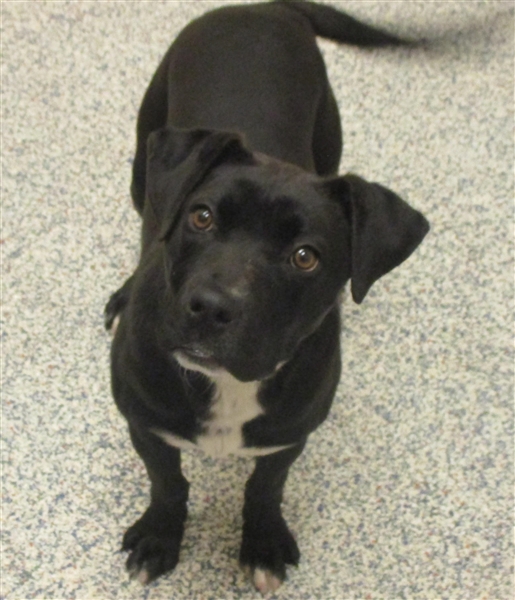
The adoption process from our local animal shelter ended up being highly competitive. Several times, we fell in love with an animal only to find out that they were currently being held for someone else. Several times, I would find an animal on the shelter website, only to learn that they had been adopted on the drive from my apartment. I can’t begrudge the shelters at all—it’s amazing that they had such a short turnaround for dogs brought into the shelter. In fact, the animal shelter I adopted Maisy from, located just outside of Denver, Colorado, had to bring weekly or bi-weekly shipments of adoptable dogs from Texas and Kansas just to keep up with the demand.
Maisy, a labrador mix (our apartment did not allow bully-type dogs), was only about 8 months old when we adopted her. (I actually think that she was probably closer to 6 months, but I suppose that’s an independent issue of adopting shelter animals. You’ll just never know how old they really are.) She was a bit younger than we had wanted, but the pressure and demand of adoptable pets gave us little choice but to compromise on something. She was a bundle of terrible puppy energy and temperament—calm and sweet one moment and biting the crap out of your fingers the next. She loved walks, but sometimes she would lay down, tired, on the pavement and I was forced to carry all 38 pounds of her back home. The first time I took her to the local coffee shop, we were forced to leave when she threw a barking-tantrum over the fact that another dog there had no interest in saying “hello.” I almost felt the need to carry a “pet at your own risk” sign, as we bumped into an old college professor of mine on the street, and he left with muddy pawprints all over his suit and slacks.
We’ve had Maisy for three years now, and we’ve sort of adapted to the fact that she’s a bit nutso. Thankfully, she no longer feels the need to bite your fingers and face in greeting, and we can normally manage an outing without her singing the song of her people to the good folks of Longmont. She absolutely cannot be around cats. She demolishes every single dog toy in existence, and she prefers to take me on a drag around the neighborhood instead of a leisurely stroll, but we make it work.
This January, we made the decision to bring another dog into the family. Maisy is so playful that we all felt she would benefit from a companion, and I know that there are so many dogs waiting to be adopted across the country. Many people have been forced to rehome their Covid-lockdown pets as they return to the office. We didn’t look for very long, as my standards for adoption were much lower this time: not a labrador, not necessarily young, and someone who had been at the shelter for a long time. Basically, I wanted the most unadoptable dog that got along with Maisy.
Enter Bread.
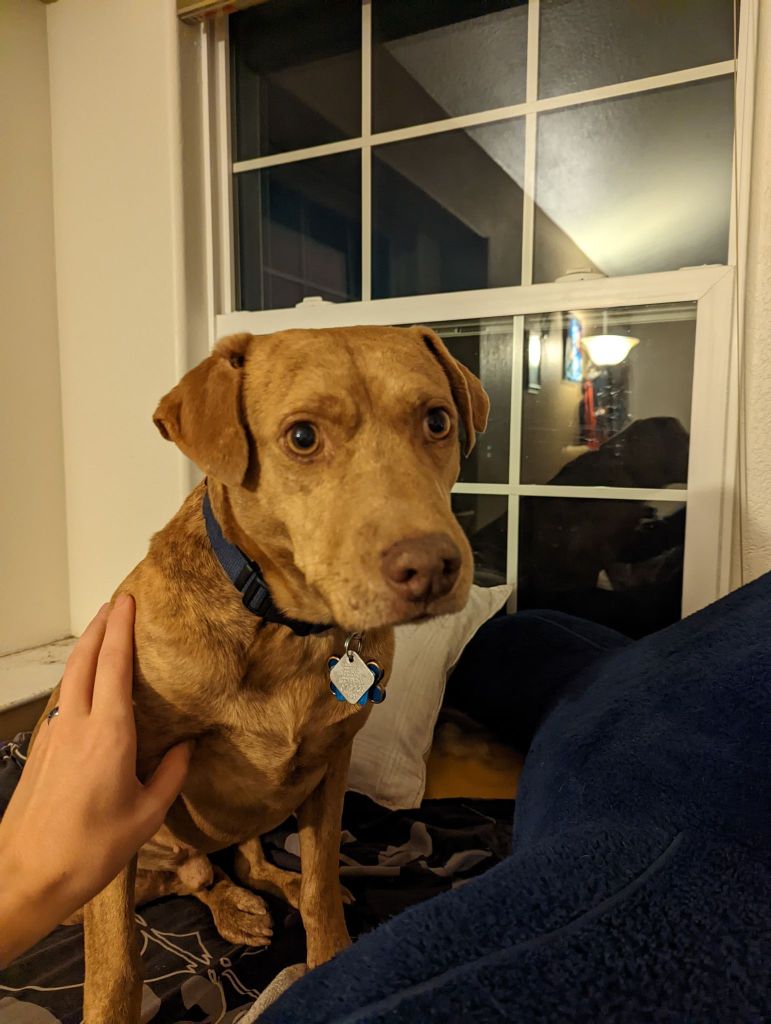
Bread is a five-year-old super-mutt (we’re still waiting on his Wisdom Panel breed results). He had been at the shelter since last April because, after moving here from Texas, the shelter found that he was suffering from heartworm, and they were required to quarantine him for 6 months until he was fully recovered. After being cleared to be adopted, Bread went home with an elderly lady, who, unfortunately, had to return him due to his tendency to slip his collar and take himself for a walk down the nearest highway. He sat at the shelter through Christmas.
Bread is very shy. Though you can barely tell from the photos, his ears have suffered serious trauma, indicating that he likely had a hard life. He’s absolutely terrified of men, he hates it when people walk around (especially when they’re wearing shoes), and he prefers to spend his day holed up in my closet or hiding under the bed. Sometimes, he’s too nervous to cross the livingroom to go outside to pee, and he will instead use the corner of our comforter to do his business. Though he will occasionally play with Maisy, the sessions are quick. People keep reminding me that it will take some time for him to become completely adjusted to us.
As I write this, I am working through my own guilt and feelings of inadequacy. Just last week, I shattered my cell phone screen because Maisy saw a cat, and I was off-balance as she tried to chase it. I was 15 days late getting Bread’s distemper vaccine and would’ve missed the 30 day grace period entirely had our boarder not notified me that it needed renewing. I pulled out old clothes for a friend to go through and ended up doing a load of unnecessary laundry because Bread was too terrified to use the bathroom anywhere else but on the clothes. The office floor behind me is littered with shredded toys, chewing bones, and chunks of mud because I can’t keep up with Maisy’s destruction. How do people rehabilitate dogs and make it look so easy?
Sometimes, when Bread barks throughout the night, desperately trying to tell me that he is too anxious to sleep, I wonder if there might be someone out there better suited to care for animals that have been through trauma. I would never raise my voice or hit them in frustration, but surely, I think to myself, they deserve a household that gets swept and mopped twice a day. Is there someone out there who might’ve adopted Maisy that could’ve taught her not to pull on her harness by now?
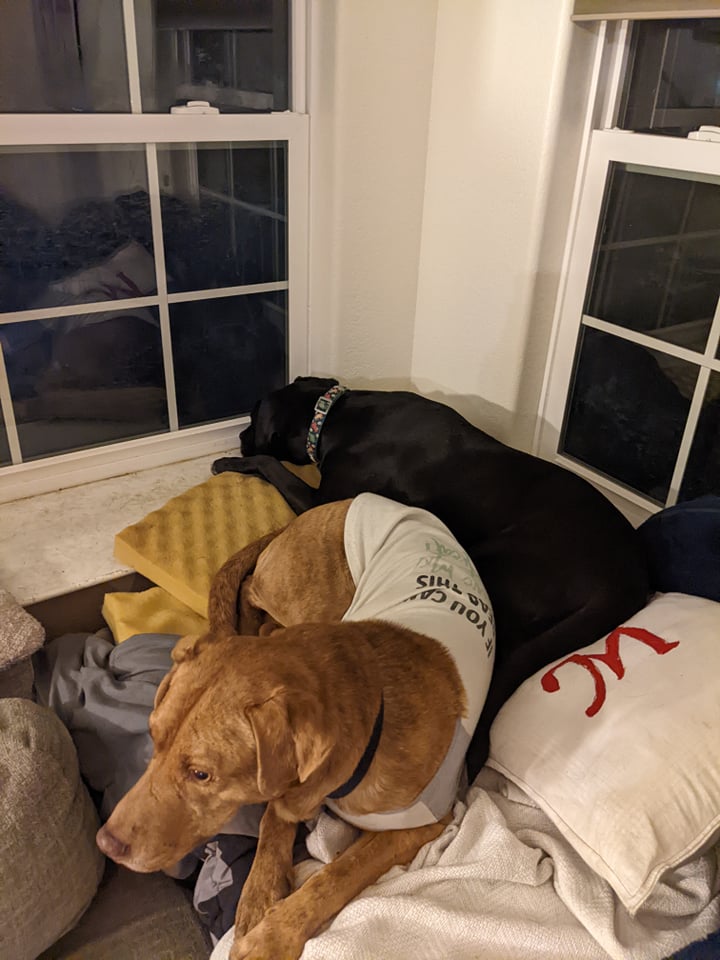
When I feel this way, I try to force myself to stick with the facts. Both Bread and Maisy had previously been adopted and returned before they made their way into our lives. Other people have obviously felt my same frustration, and so to feel it does not indicate a failure on my part. I remind myself that they are both safe, well-fed, and receiving veterinary care. Sometimes, when I greet them in the evenings, we all sit on the couch and bask in the feelings of security, and I am glad that I can offer each of them a soft scritch on the head and a belly rub.
 Miyalyn's Blog